Fruit trees
Persimmon Tree Nova Scotia: A Complete Guide for Canadian Growers (2025)
Growing a persimmon tree in Nova Scotia sounds impossible to many gardeners —but the truth is, cold-hardy American persimmons grow exceptionally well in our climate.
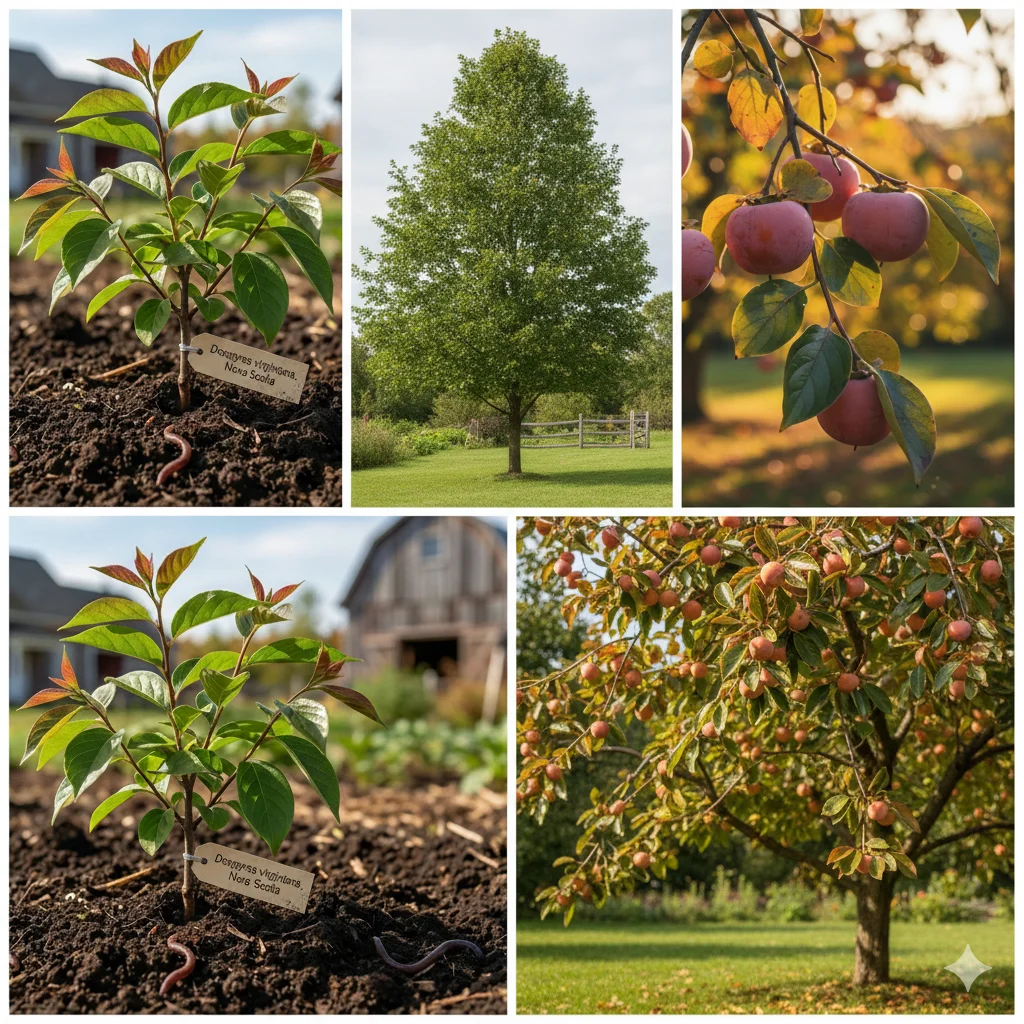
Growing a persimmon tree in Nova Scotia sounds impossible to many gardeners —
but the truth is, cold-hardy American persimmons grow exceptionally well in our climate.
With rising interest in rare fruits, food forests, and ultra-hardy edible trees, persimmons have become one of the most rewarding fruit trees you can plant in Atlantic Canada.
This guide covers everything:
Which persimmon varieties grow in Nova Scotia
How cold-hardy they are
Soil, sunlight, and spacing
How long they take to fruit
Care, watering, pruning
Winter survival
Pests, diseases, and common mistakes
Where to buy persimmon trees in Nova Scotia
Let’s dive in.
What Makes Persimmon Trees Perfect for Nova Scotia?
The American Persimmon (Diospyros virginiana) is naturally adapted to cold climates, making it a strong performer in the Canadian Maritimes.
Here’s why it thrives:
1. Extremely Cold Hardy
American persimmon handles –30°C to –35°C (Zone 4).
Many Nova Scotia regions fall within Zone 5 or milder Zone 6, making it an even safer match.
2. Very Low Maintenance
Once established, persimmons are:
Drought-resistant
Rarely bothered by pests
Not prone to major diseases
Able to grow in poor soils
Resistant to strong coastal winds
3. Delicious Fruit That Stores Well
Ripe persimmons taste like caramel pudding, dates, and apricots combined.
The fruit freezes well, dries beautifully, and is amazing for baking.
4. Great for Food Forests
Its deep taproot improves soil and helps neighboring plants access nutrients.
Pollinators and wildlife love persimmons too.
Can Persimmon Trees Survive Nova Scotia Winters?
Yes — very easily.
American persimmons survive:
Harsh winds
Coastal frost
Long winters
Sudden temperature swings
In fact, persimmons often fruit better after colder winters because they require proper dormancy.
Recommended Hardiness
Persimmon Type | Hardiness | Recommended for NS |
|---|---|---|
American Persimmon | Zone 4 | ⭐ BEST |
Hybrid Persimmons | Zone 5 | Good |
Asian Persimmons | Zone 7 | ❌ Not recommended outdoors |
Best Persimmon Varieties for Nova Scotia (2025)
These varieties grow extremely well in Atlantic Canada:
1. American Persimmon Seedlings
✔ Hardiest option
✔ Best root system
✔ Great for food forests
✔ Affordable and adaptable
2. ‘Prok’
✔ Large fruit
✔ Very productive
✔ Early ripening (important for short seasons)
3. ‘Yates’
✔ Sweet, custard-like flesh
✔ Consistent fruiting
✔ Strong cold resistance
4. ‘Meader’
✔ One of the earliest hardy cultivars
✔ Very reliable in cold climates
✔ Beautiful growth shape
How to Plant a Persimmon Tree in Nova Scotia
Persimmons are easy, but placement matters.
1. Best Planting Time
Spring (April–June) is ideal
Fall planting also works with mulch protection
Avoid planting in frozen or waterlogged soil
2. Sunlight Requirements
Persimmons prefer:
Full sun (6–8+ hours daily)
They WILL tolerate part-shade, but fruiting may be lighter.
3. Soil Requirements
Persimmons grow in almost any soil:
Clay
Sandy
Rocky
Loam
But the ideal soil is:
Well-draining
Slightly acidic to neutral (6.0–7.0 pH)
Not constantly wet
Avoid low-lying spots that hold water.
4. Spacing
Standard trees: 20–25 feet apart
Food forest spacing: 12–16 feet is fine
They grow upright, not overly wide.
5. Watering
Year 1–2 (establishment phase):
Water deeply once per week
Increase during hot spells
After Year 3:
Persimmons are almost drought-proof.
Only water during extreme droughts.
When Do Persimmon Trees Fruit in Nova Scotia?
Average Fruiting Timeline:
Seedlings: 4–7 years
Grafted varieties: 3–5 years
It depends on:
Age of the tree
Sunlight
Variety
Soil fertility
Fruit Ripening:
Late September to November, depending on variety.
This works perfectly with Nova Scotia’s autumn climate.
Pruning Persimmons (Simple Guide)
Persimmons require much less pruning than apples or pears.
Do this once per year (late winter/early spring):
✔ Remove crossing branches
✔ Remove dead/damaged wood
✔ Keep an open center
✔ Maintain upright structure
✔ Do NOT over-prune (slows fruiting)
How to Protect Persimmon Trees in Winter
Persimmons are hardy, but young trees need minimal winter prep.
Year 1–2 protection:
Mulch 4–6 inches thick
Use leaf mulch or wood chips
Wrap trunk with tree wrap to prevent frost cracks
Avoid fertilizing after August
After Year 3:
No special protection needed.
Pests & Diseases in Nova Scotia
Persimmons are one of the lowest-maintenance fruit trees.
Common issues (rare):
Gypsy moth caterpillars
Aphids on new growth
Occasional deer browsing
Minimal fungal issues
Most Nova Scotia growers report almost zero problems.
Persimmons in Food Forests
Persimmons are PERFECT for food forests because they:
Build deep soil structure
Support wildlife
Provide autumn food for birds
Improve water retention
Have deep taproots that aerate soil
Require almost no care
They also pair well with:
Where to Buy Persimmon Trees in Nova Scotia
Local nurseries rarely stock persimmons, but Little Tree Farm carries hardy, cold-tested varieties suitable for Atlantic Canada.
➡️ Browse our Persimmon Trees here
We ship across Nova Scotia and offer pot-ready and ground-ready options.
Conclusion: Yes — You CAN Grow Persimmon Trees in Nova Scotia
If you want a fruit tree that is:
Beautiful
Easy to grow
Extremely hardy
Disease-resistant
Highly productive
Rare and valuable
…persimmon is one of the best choices for Canadian gardeners.
Plant once → enjoy fruit for decades.